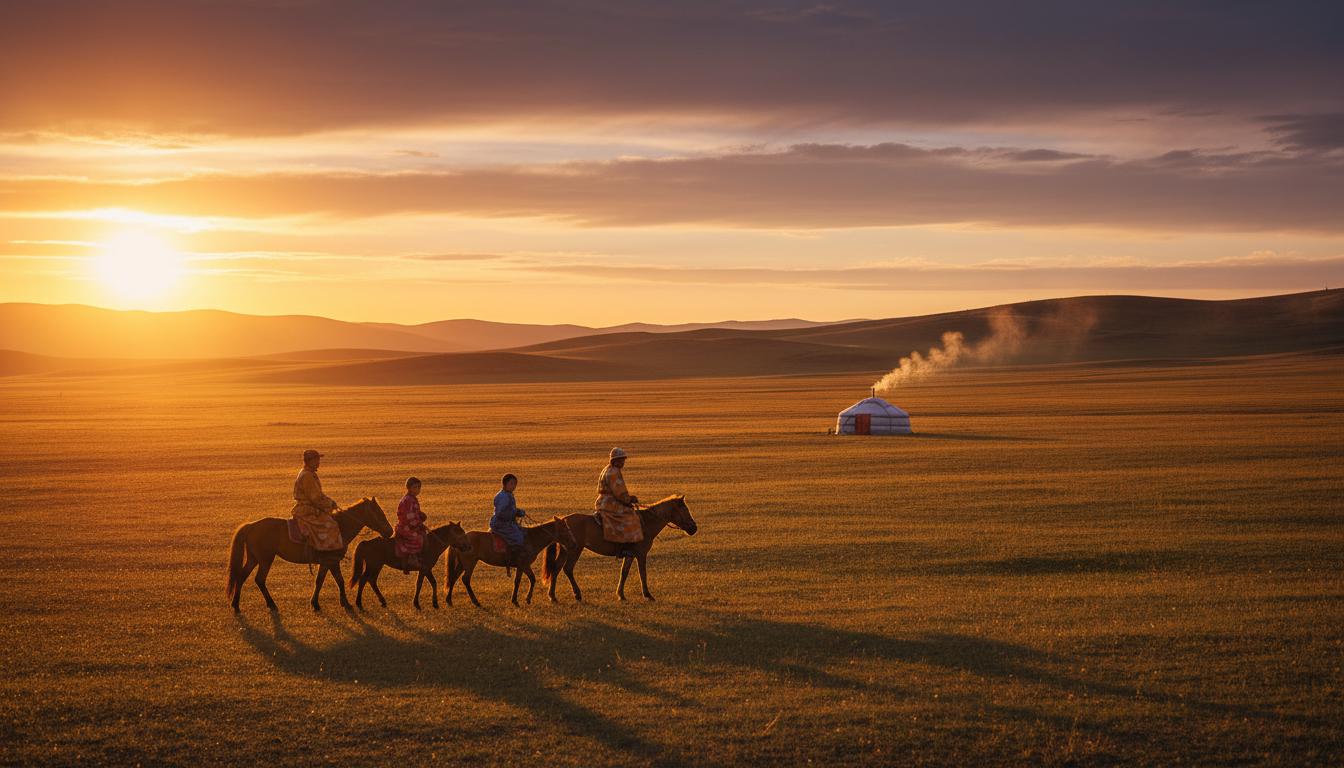
The first time I saw the Mongolian steppe, I understood why poets call it an ocean of grass. It stretches to every horizon, an undulating sea of green and gold that seems to breathe with the wind. There are no fences, no roads, no signs of the boundaries that define life in the cities I have always known. Only the sky, vast and ever-changing, and the occasional cluster of white gers dotting the landscape like ships at anchor.
I had come to find the Dukha, one of the last nomadic reindeer herding peoples in the world. They live in the far north, near the Russian border, in a region so remote that the nearest paved road is a two-day ride on horseback. My guide, a weathered man named Batbayar, picked me up in Ulaanbaatar in a Soviet-era van that smelled of diesel and fermented mare's milk.
“The steppe does not belong to us. We belong to the steppe. It was here long before my grandfather's grandfather, and it will be here long after my grandchildren's children are gone.”
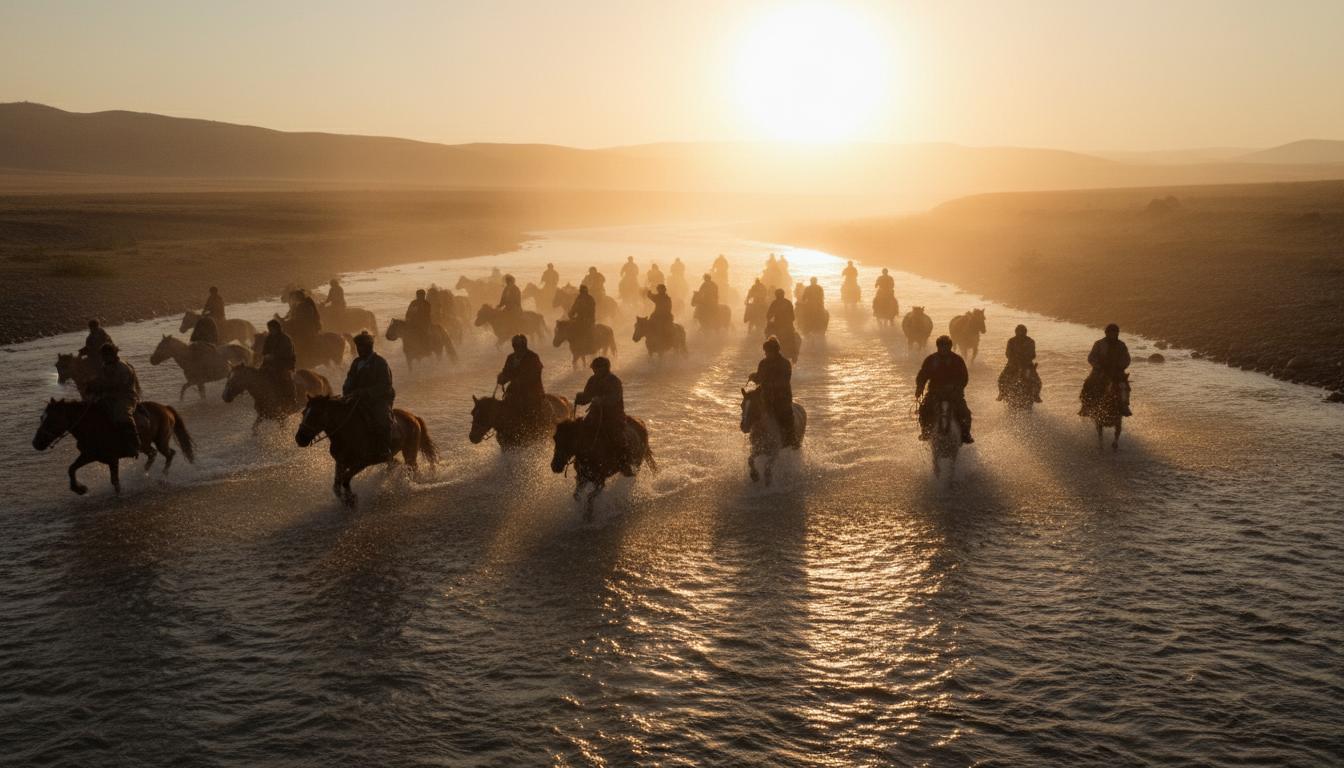
After three days of driving, the roads disappeared entirely. We followed paths that existed only in Batbayar's memory, crossing rivers that had no names on any map. The landscape shifted from rolling grasslands to dense taiga forest, and the air grew thin and cold. Then, on the fifth morning, I saw them: a line of reindeer moving through the mist, their antlers silhouetted against the rising sun like the branches of walking trees.
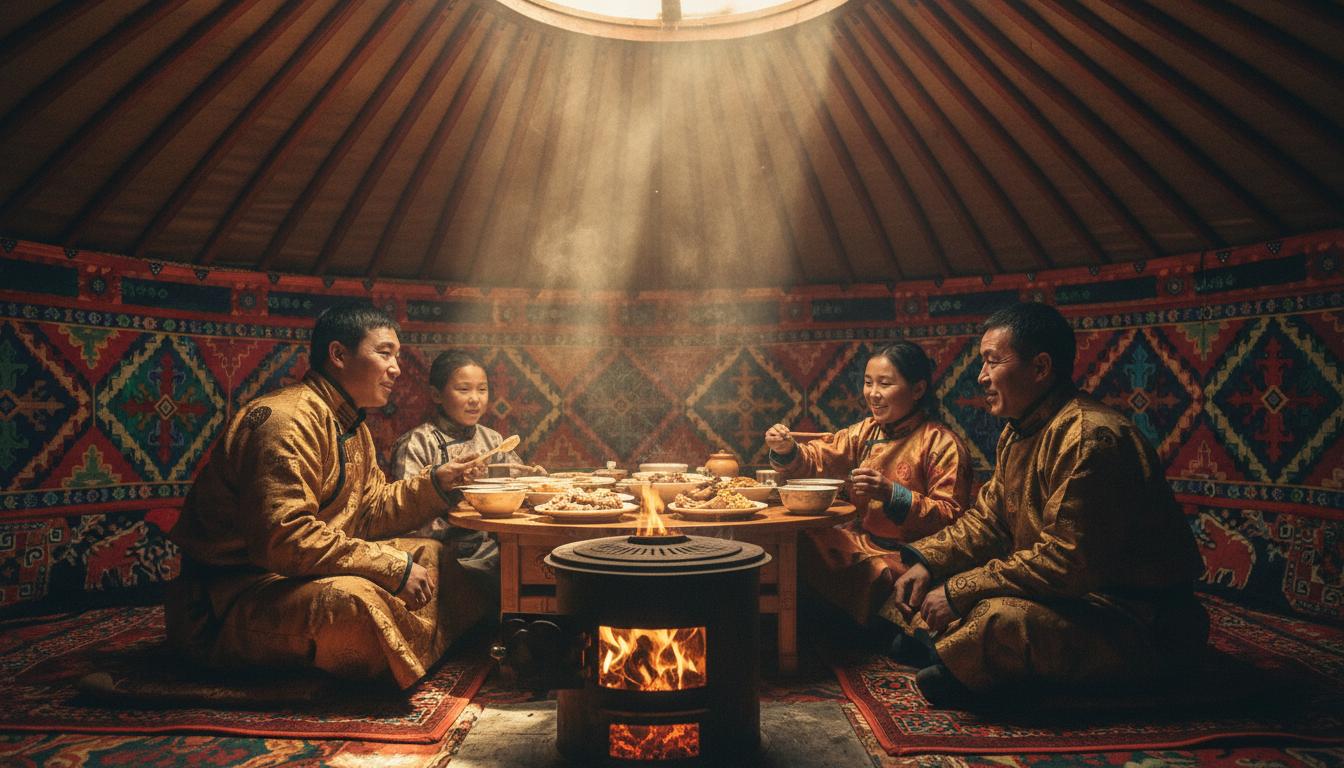
The Dukha camp was smaller than I had imagined. Five gers, a corral of rough-hewn logs, and a few dozen reindeer grazing on lichen. Children ran barefoot in the cold morning air, chasing each other between the tents with a freedom that seemed almost feral. An old woman sat outside her ger, milking a reindeer with practiced hands, singing a song in a language I did not understand but somehow recognized.
Click any image to view the gallery.
Over the weeks that followed, I learned the rhythms of Dukha life. They move their camp every few weeks, following the reindeer's need for fresh pasture. The gers are dismantled and reassembled with astonishing speed, the heavy felt walls rolled and tied to the backs of pack animals. What looks like chaos to an outsider is, in fact, a choreography refined over centuries.
But the Dukha are not immune to the pressures of the modern world. Young people are leaving for Ulaanbaatar and beyond, drawn by the promise of education and opportunity. Climate change is altering the delicate balance of the taiga, with warmer winters bringing new diseases that the reindeer have no defenses against. The herd, which numbered in the thousands a generation ago, is now barely six hundred animals.
“My son says he wants to be a programmer. I asked him what a programmer does. He said he will sit in a room and talk to a machine all day. I told him he already talks to reindeer, and at least reindeer talk back.”
One evening, as the sun bled into the horizon and painted the steppe in shades of amber and violet, Batbayar and I sat on a ridge above the camp sharing a bottle of airag, the fermented mare's milk that is the nomad's drink of choice. He told me about his grandfather, who had herded reindeer through the collectivization campaigns of the 1950s, when the Soviet-backed government tried to force the nomads into settled collective farms.
“They took our reindeer,” he said, his voice flat and matter-of-fact. “They made us live in houses. My grandfather pretended to agree. At night, he would walk twenty kilometers to check on the hidden herd. He did this for ten years. Then, when the government changed, he brought the reindeer back. He was an old man by then, but he brought them back.”
I asked Batbayar if he thought the Dukha would survive another generation. He was quiet for a long time, watching the last light fade from the sky. Then he pointed to a young boy, no more than eight, who was practicing lasso techniques on a wooden post near the corral. The child's movements were clumsy but determined, and after each failed throw he would retrieve the rope and try again.
“See that boy?” Batbayar said. “His father works in a coal mine in the Gobi. His mother sends money from Seoul, where she cleans hotel rooms. He lives with his grandmother. And every day, he practices with that lasso. He does not know why. But his hands remember, even if his mind has forgotten.”
On my last morning, the camp woke before dawn. The reindeer were restless, sensing a storm moving in from the north. I helped pack my gear onto a spare horse, and as I prepared to leave, the old woman who had been milking reindeer on my first day approached me. She pressed a small bundle of dried lichen into my hands and said something in Tuvan, the Dukha language.
Batbayar translated: “She says this is for your journey. It is the food of the reindeer, and it will keep you connected to the earth, no matter how far you travel.” I thanked her, and she smiled, her face a map of wrinkles that seemed to contain the entire history of her people. Then she turned and walked back to her ger, her silhouette disappearing into the morning mist, and I understood that I had been given something far more valuable than a story. I had been given a memory.
